Theodore Roosevelt
2026 Legend of Conservation
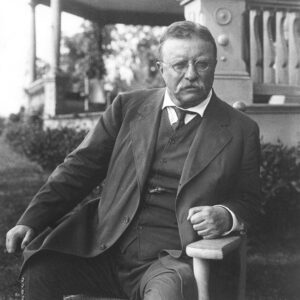
Theodore Roosevelt is remembered as one of America’s most influential conservation presidents, but his love of nature began long before he entered the White House. Born in New York City in 1858, Roosevelt struggled with chronic asthma as a child. He spent much of his childhood indoors reading. Trips to the countryside offered a respite from the city dust and gave him a chance to explore and grow his love and curiosity of the natural world. These early experiences helped shape his belief that nature was not only beautiful but essential to building strength, curiosity, and character.
Roosevelt’s connection to the wilderness deepened in 1883 when he traveled to the Dakota Territory. There, he hunted, worked as a cattle wrangler, and invested in cattle ranching. The wide-open landscape of the American West inspired him, but it also showed him how quickly natural resources and wildlife could disappear through overuse and neglect. After the death of his first wife, Alice, Roosevelt returned to the Dakotas, where the wilderness became a place of healing. He came to believe the American wilderness helped shape the nation’s individualism, love of liberty, and independence.
In 1887, Roosevelt helped establish the Boone and Crockett Club with George Bird Grinnell and other hunters devoted to conservation. The club promoted ethical hunting standards such as fair chase and sportsmanship while also supporting some of the first laws focused specifically on wildlife conservation. Through this work, Roosevelt helped show responsible hunters were also strong advocates for protecting wildlife and wild places.
When Roosevelt became president in 1901, he turned his conservation values into national policy. During his presidency, he added more than 125 million acres to national forests, supported the creation of bird sanctuaries, and persuaded Congress to pass the Reclamation Act of 1902, which established irrigation systems in the West. These actions reflected his belief that America’s forests, water, wildlife, and open spaces needed to be managed wisely for future generations.
Roosevelt once argued “the forest and water problems are perhaps the most vital internal problems of the United States.” This statement shows how seriously he viewed conservation. To him, protecting nature was not simply about scenery or recreation; it was a national responsibility. By connecting his personal love of the outdoors with public policy, Roosevelt helped make conservation a national priority and left a legacy that continues to shape how the U.S. protects its wild places.