
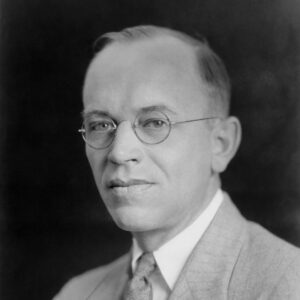
Aldo Leopold
2026 Legend of Conservation
Aldo Leopold is remembered as one of the most important figures in American conservation because he helped people see land not simply as property but as a living community. Born in Burlington, Iowa, in 1887, Leopold developed a lifelong connection to the outdoors that shaped his work as a forester, philosopher, educator, writer, and conservationist.
Leopold’s work helped establish the foundation for wildlife management as a professional field. After graduating from the Yale Forest School in 1909, he joined the newly created U.S. Forest Service and worked as a ranger in the Southwest. In 1924, he helped create the Gila National Forest in New Mexico, the first official wilderness area in the United States. That same period also marked a new chapter in his career as an educator. He began teaching at the University of Wisconsin and later published “Game Management,” the first major textbook on wildlife management. Because of these contributions, Leopold is often considered the father of wildlife conservation and modern conservation.
“A Sand County Almanac” formed what became his most lasting idea when the book was published in 1949. The book grew out of Leopold’s work restoring farms in Wisconsin’s sand counties, areas known for sandy soils and forests. Through this restoration work, Leopold began to describe a “land ethic,” or a moral responsibility to the natural world. He believed soil, water, plants, animals, and people all belong to the same community. As he wrote, “When we see land as a community to which we belong, we may begin to use it with love and respect.”
Today, Leopold’s legacy continues through the Aldo Leopold Foundation, which champions his land ethic through historic preservation, land care, community education, and the development of future conservation leaders. His ideas remain relevant because they ask us to live more thoughtfully and harmoniously within nature. Leopold’s work reminds us conservation is not only science or policy – it is a way of understanding our place in the world and choosing to care for the land that sustains us.