
Lee Wulff
2026 Legend of Conservation
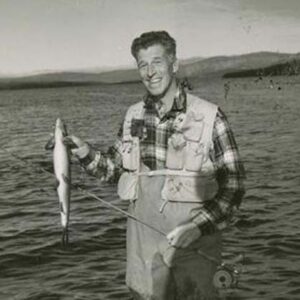
Lee Wulff helped shape modern fly fishing not only through his skill with a rod but through his deep belief that fishing should honor the waters and wildlife that make the sport possible. Born in Valdez, Alaska, in 1905, Wulff spent his earliest years surrounded by wild rivers and fish. When his family moved to Brooklyn, New York, around the time he was 12, he carried that love of open country with him.
Wulff’s background was unusually wide-ranging. After graduating from Stanford University with an engineering degree, he studied art in Paris, and both disciplines influenced his work. His mechanical mind helped him invent practical gear, like the fly-fishing vest, while his eye for design led him to create still-popular flies such as the Grey Wulff and Royal Wulff. He was also a gifted communicator through writing, illustration, film, and teaching. Wulff introduced fly fishing to a broad audience through the ABC television program “American Sportsman” and helped make the sport more accessible to people who may never have stepped into a trout stream.
Yet Wulff’s greatest legacy may be his conservation ethic. In 1936, he wrote the now-famous line, “game fish are too valuable to be caught only once,” a statement that helped popularize catch-and-release fishing in the U.S. At a time when many anglers measured success by the number of fish they kept, Wulff argued for restraint and responsibility. He understood nature could not simply be duplicated by hatcheries or fisheries alone. Wild fish and wild rivers deserved protection because they held value beyond a single day’s catch.
In 1979, Lee and his wife, Joan Wulff — a master fly fisher and teacher in her own right — founded the Wulff School of Fly Fishing on their Beaverkill property in New York. Together, they taught generations of anglers to see fly fishing as more than a sport. It was a practice of patience, observation, and stewardship. Still operating today, the school continues their shared commitment to clear instruction and respect for the river – a standard more common now than ever thanks to Wulff’s dedication to the sport.