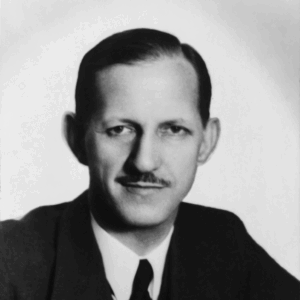
John D. Dingell
2026 Legend of Conservation
It was a small piece of paper, easy to overlook but impossible to overstate. Purchased each year by waterfowl hunters, the Federal Duck Stamp became a quiet symbol of stewardship and shared responsibility for America’s wildlife.
Behind this simple but revolutionary idea was Representative John Dingell Sr. of Michigan, a congressman who believed that those who enjoyed the nation’s natural resources should also help preserve them. His leadership in creating the Federal Duck Stamp Program established a conservation model that continues to safeguard wildlife nearly a century later.
As a lawmaker, Dingell quickly became known as a practical legislator who believed government could play a constructive role in solving national problems, including the growing crisis facing America’s wildlife.
By the early 1930s, waterfowl populations were declining at an alarming rate. Wetlands were disappearing as marshes were drained for agriculture and development, while years of drought and heavy hunting placed additional pressure on migratory bird populations. Conservationists recognized that protecting ducks and geese required more than regulating hunting seasons— it required preserving the habitats on which these birds depended throughout their annual migrations.
Dingell understood that meaningful conservation demanded a dependable source of funding. Working alongside fellow conservation legend J.N. “Ding” Darling, he championed legislation that would become the Migratory Bird Hunting Stamp Act of 1934, commonly known as the Federal Duck Stamp Act. The law required waterfowl hunters to purchase an annual federal duck stamp before hunting migratory birds.
The idea was remarkably innovative. Instead of relying solely on general tax revenues, the people who benefited directly from healthy waterfowl populations would contribute to their protection. Revenue from stamp sales would be used to acquire and preserve wetlands for the National Wildlife Refuge System, creating a permanent funding stream dedicated exclusively to habitat conservation.
The results exceeded expectations. Since the first Duck Stamp was issued in 1934, the program has since generated hundreds of millions of dollars for conservation and helped protect more than six million acres of wetlands and other critical habitats across the United States. These protected lands provide essential breeding, nesting, and migration habitat for ducks, geese, swans, shorebirds, and hundreds of other wildlife species. They also improve water quality, reduce flooding, recharge groundwater, and provide countless recreational opportunities for birdwatchers, photographers, anglers, and outdoor enthusiasts.
Although John D. Dingell Sr. served only one term in Congress before his death in 1955, his conservation legacy has endured far beyond his years in office. His support for the Duck Stamp Act created a lasting financial foundation for the National Wildlife Refuge System and helped inspire a broader movement toward science-based wildlife management and habitat protection.